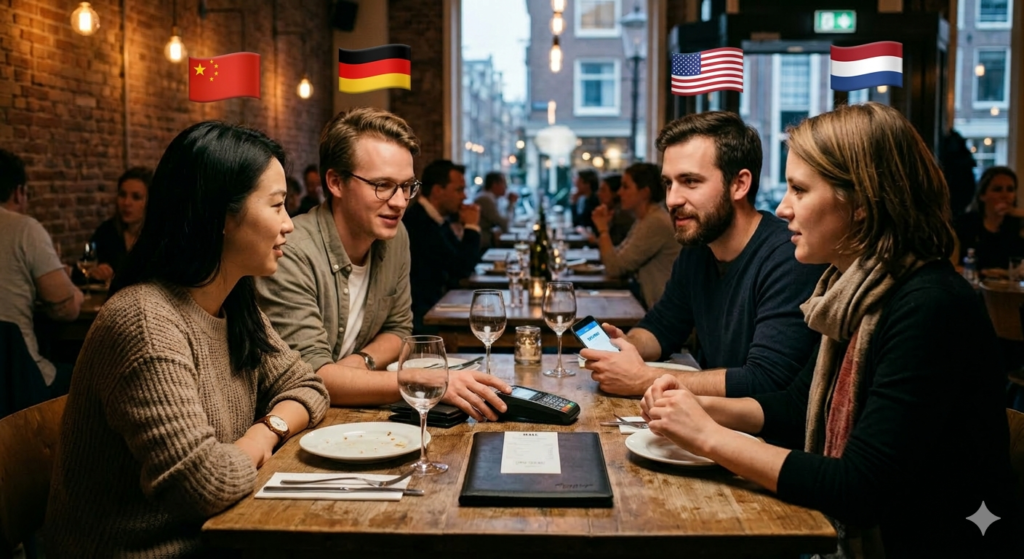
By: Vedant Talekar. Image generated by Gemini AI
The meal is finished, the conversation is winding down, and then the waiter places that small black folder in the centre of the table. What happens next depends entirely on where you are in the world. Having grown up in China, moved to the Netherlands for university, and spent time in the US, here’s what I’ve learned about paying for group meals across four different cultures.
China: The Generosity Battle
In China, the person who extended the invitation is generally expected to pay. Treating others demonstrates generosity and maintains social harmony. When the bill arrives, a ritual begins. People will physically reach for it, sometimes gently blocking others from grabbing it first, with polite protests: “Let me take care of it! No, please, you paid last time!”
If someone significantly older or more senior is at the table, they’ll typically pay as a sign of respect. Refusing their offer can actually be more offensive than accepting it.
United States: The Split Culture
The American approach varies but splitting the bill evenly is standard practice, regardless of who ordered what. Payment apps like Venmo have made this seamless someone pays with a card, everyone else sends money digitally.
One subtlety is the “fake offer.” Sometimes people say “let me get this” as a polite gesture, fully expecting the other person to decline. If someone genuinely wants to pay, they’ll insist twice. Without that, assume you’re paying for yourself.
Netherlands: The Precision Approach
The Dutch approach is famously practical. Splitting evenly is less common here. Instead, everyone pays exactly for what they ordered. This isn’t considered cheap, it’s considered fair.
Apps like Tikkie are extremely popular, allowing one person to pay and then send payment requests for exact amounts. If a Dutch person invites you somewhere, assume you’re paying for yourself unless stated otherwise. “Going Dutch” isn’t just an expression here, it’s everyday practice.
Germany: The Structured Middle Ground
Germany shares similarities with the Netherlands but with more upfront organisation. Paying separately (getrennt zahlen) is completely normal. Germans often tell the waiter at the beginning of the meal that the bill will be separate, preventing confusion later.
However, if a German explicitly says “I’m inviting you” (Ich lade dich ein), they genuinely mean it. This isn’t offered casually, so when it happens, it carries real weight and covers the entire meal.
So the next time a cheque comes, you know what to do!
Leave a Reply