by Alexander Bernhardt
Have you ever wondered why your Slavic friend knocks on wood three times after mentioning something positive? Yes? Then this blog will provide all the answers you need about Slavic superstitions.
First of all, why do Slavs and people from Eastern Europe believe in superstitions? Why are superstitions so much more present in Eastern Europe in comparison to, e.g., the Netherlands?
In Slavic and Eastern European culture, there are deep-rooted pagan traditions that have blended with Orthodox Christianity during the process of Christianization. In the so-called dvoeverie (Russian: двоеверие), which translates to “dual faith”, ancient Slavic beliefs merged with Orthodoxy, turning spirits into saints and omens into holidays. Rituals offered comfort amid unpredictable rural lives surrounded by forests and harsh winters.
Now, let’s answer the question of why superstitions aren’t that prevalent in parts of Western Europe. The answer is simple: folklore and belief are more preserved in Eastern Europe. Therefore, people in Western Europe don’t really believe in superstitions.
Let’s start with the already mentioned wood-knocking superstition. It’s probably the most famous one. When mentioning something positive, Slavs knock on wood three times to ward off bad luck, preventing fate from being “jinxed”.
Let’s imagine you have a conversation with your Slavic friend, boasting, “I’ve never been sick this year!” Your Slavic friend would immediately knock three times on a wooden table, muttering “touch wood” (or their local equivalent like Russian tfu-tfu-tfu (тьфу-тьфу-тьфу)). Don’t worry if there is nothing wooden around—it’s also allowed to knock on your head. This superstition originates from people who believed trees were homes to good spirits, and knocking on them called them while also distracting bad spirits.
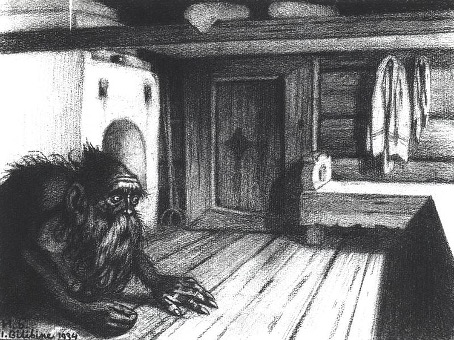
A good spirit which, albeit not living in trees but in homes behind the stove, is the domovoy (Russian: домовой, “of the household”). The domovoy protects the family and looks after the children. So next time you enter a Slavic household, have a look behind the stove and say hi to the domovoy.
I remember in January I wanted to grab something from the store, so I left my house to go to the store. After two minutes, I came back home because I forgot my headphones. My mother asked why I was back already, so I told her I forgot something. In order to go back on my way to the store, my mother forced me to look in the mirror and stick out my tongue. You might think, why? It’s because in Slavic mythology, mirrors act as portals to spirits. Looking into the mirror and sticking out your tongue blocks evil forces from following you. By the way, this also reassures the domovoy that you’re not inviting bad luck.
Slavic superstitions are a really deep topic, and there are way too many to mention all of them, but here are some of my personal favorites:
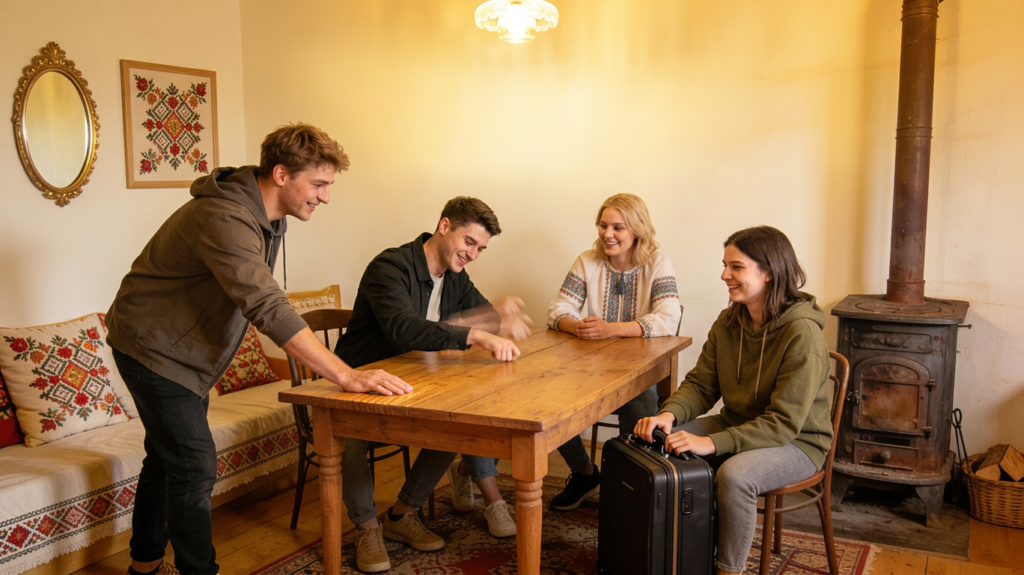
Sitting before travelling
Before going on a journey, Slavic families traditionally sit down together briefly “for the road”. This fools household spirits into thinking you’re staying at home, ensuring safe travels.
No whistling indoors
In Slavic households, this is one of the biggest taboos. Whistling inside a home invites poverty, so please never whistle in your Slavic friend’s home.
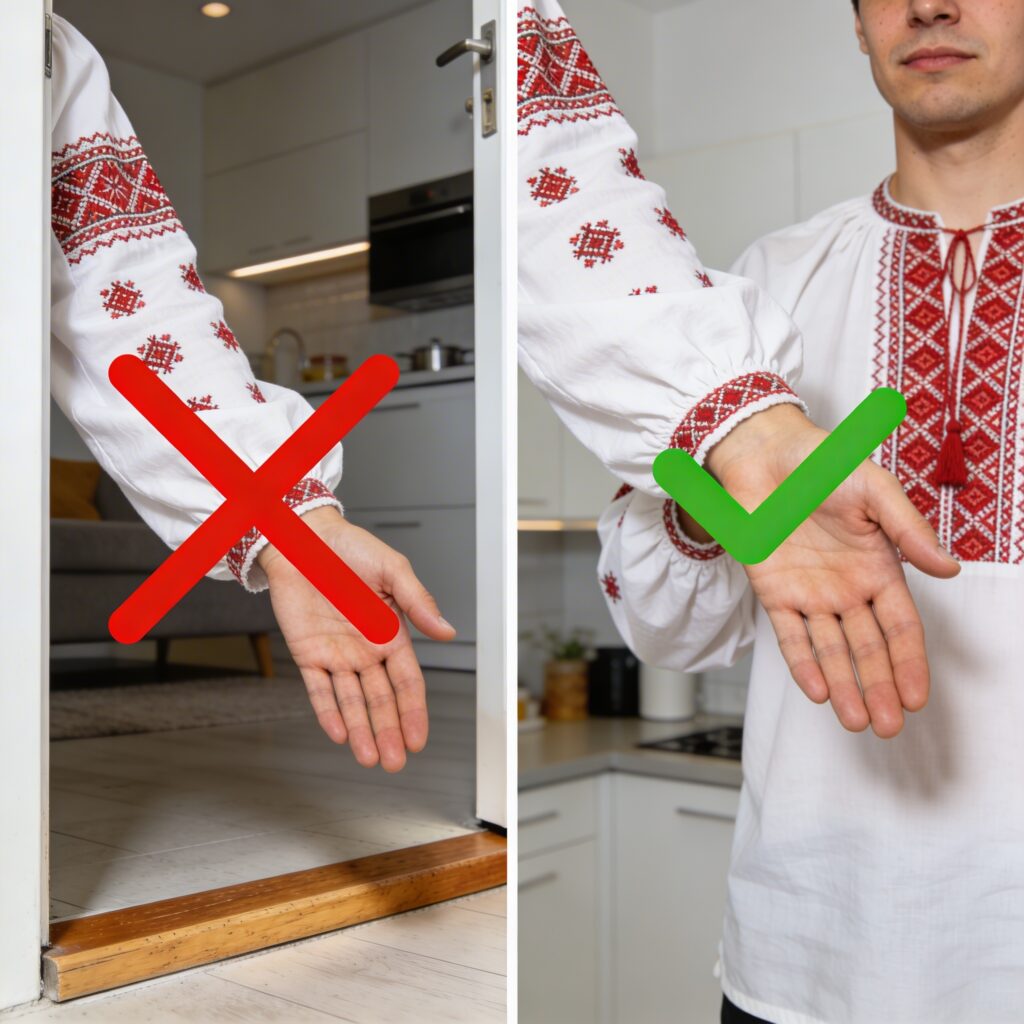
Threshold taboo
Another big taboo. Never shake hands, pass items, or speak across a doorway threshold. Either you fully step inside or outside. If not, it separates the home’s safe world from chaotic spirits outside.
No cleaning after guests leave
Cleaning the house right after guests depart sweeps out their energy and damages the relationship, which prevents them from visiting you again. Only once the guests arrive at their destination can the house be cleaned. Cleaning it too early can even invite bad luck on the journey.
Of course, there are different kinds of Slavs, and some countries may have superstitions that others don’t have. Are there superstitions you know about, or do you have stories about superstitions from your own environment you want to share with us? Just drop a comment and check out some of our other blog posts.

Leave a Reply