
My name is Marci, I grew up in Germany. Today I want to take you along on a little journey about all kinds of traditional German meals. Even while living abroad, German food is something I will always turn back to when I’m in need of comfort.
If there’s one thing you will always find on a German plate, it’s bread. Bread is not just food here, it’s part of daily structure. I recommend everyone who is travelling to Germany to try a small bakery and try their best “Sauerteig”. I used to have it warm out of the oven with some salt and butter on it. We eat bread for breakfast and for dinner, and we even have a word for a typical evening meal: “Abendbrot,” which literally means “evening bread.” It usually consists of different types of bread, cheese, cold cuts, maybe some pickles, and that’s it. Simple, but somehow very satisfying. A small random fact: many Germans prefer savory breakfasts too, so bread shows up in the morning as well. On Sundays we like to have our “Sonntagsfrühstück”, with a fancy assembly of bread buns or “Brötchen”, some eggs, and many different cold cuts.
Another classic you can’t ignore is Bratwurst. Germans are very serious about their sausages. Depending on where you are, the taste, size, and even the way it’s served can change. In some regions, people eat it with mustard and bread, while in others it comes with sauerkraut or potato salad. It’s one of those foods that you’ll find at festivals, markets, or just as a quick snack on the go. A famous variation of the Bratwurst is “Currywurst”, invented in Berlin and loved by all of Germany. It’s a sliced sausage covered in a tangy ketchup-based sauce and sprinkled with curry powder. We serve it all year round and you can find it on the menu of every snackbar!
A globally well-known and loved side dish is Sauerkraut. It’s one of those dishes people often have strong opinions about, but they belong on a German plate. It’s basically fermented cabbage, slightly sour, and usually served as a side dish. Not everyone eats it every day, but it definitely has a place in traditional cuisine. It’s also one of those foods that older generations especially like to keep around.


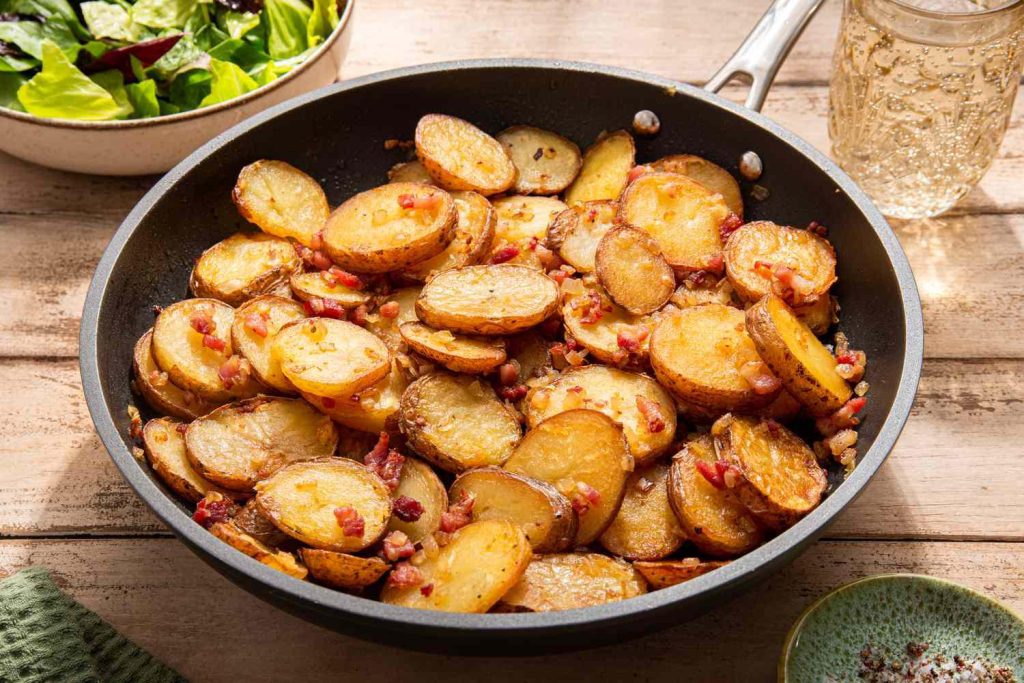
Potatoes are another essential part of German cooking. Whether boiled, fried (“Bratkartoffeln”), mashed, or turned into dumplings (“Kartoffelknödel), they appear everywhere. If you visit different regions, you’ll notice that people prepare them in completely different ways. Arguably, this is THE ingredient all Germans love to cook with, and an ingredient that connects us all to the extent that it even shows up in our language. There’s a reason Germans call each other “German potato” to point out typical German behaviours.
Of course, we also have dishes like Schnitzel in every traditional German restaurant. It’s thin meat that is fried in a crunchy breadcrumb crust. While it originally comes from Austria, it has become a regular part of German menus. It’s usually served with fries, potatoes, or sometimes even a simple salad. Lots of Germans have grown to just eat it on their Brötchen with some Ketchup and Mustard.
And then there are Pretzles, or “Brezeln”. They are a type of lye pastry that are soft on the inside, slightly crispy on the outside, and topped with salt. They are a typical snack, especially in the south of Germany. Many people grab one on their way to work or while walking through the city. It’s simple, quick, and very “German” in its own way. I probably found the biggest Brezeln I have ever seen during Oktoberfest season in Bavaria.
When it comes to sweets, we Germans definitely have a soft spot for cakes. Going out for coffee and cake, “Kaffee und Kuchen”, is something many families still do, especially on weekends. I grew up enjoying a little treat alongside some tea or coffee at exactly 16:00 regularly. It’s less about the cake itself and more about taking time to sit together and just enjoy the presence of those who are sitting with you, it’s a little pocket of peace for many Germans in their day. Below is a picture of me cutting Schwarzwälderkirschtorte (Black forest cake). I think I reflect the German enthusiasm for cake pretty well there.
So overall, German meals and snacks typically carry quite simple flavour profiles. It’s more about the ingredients themselves rather than strong seasoning that offers you a hearty meal consisting of some meat, sauce, potatoes, and some Sauerkraut. I find that is part of what makes the food feel so familiar and comforting.
Thank you for reading, and I hope this gave you a little insight into everyday life in Germany. I hope I inspired you for your next visit in Germany, and hope you’re not too hungry!